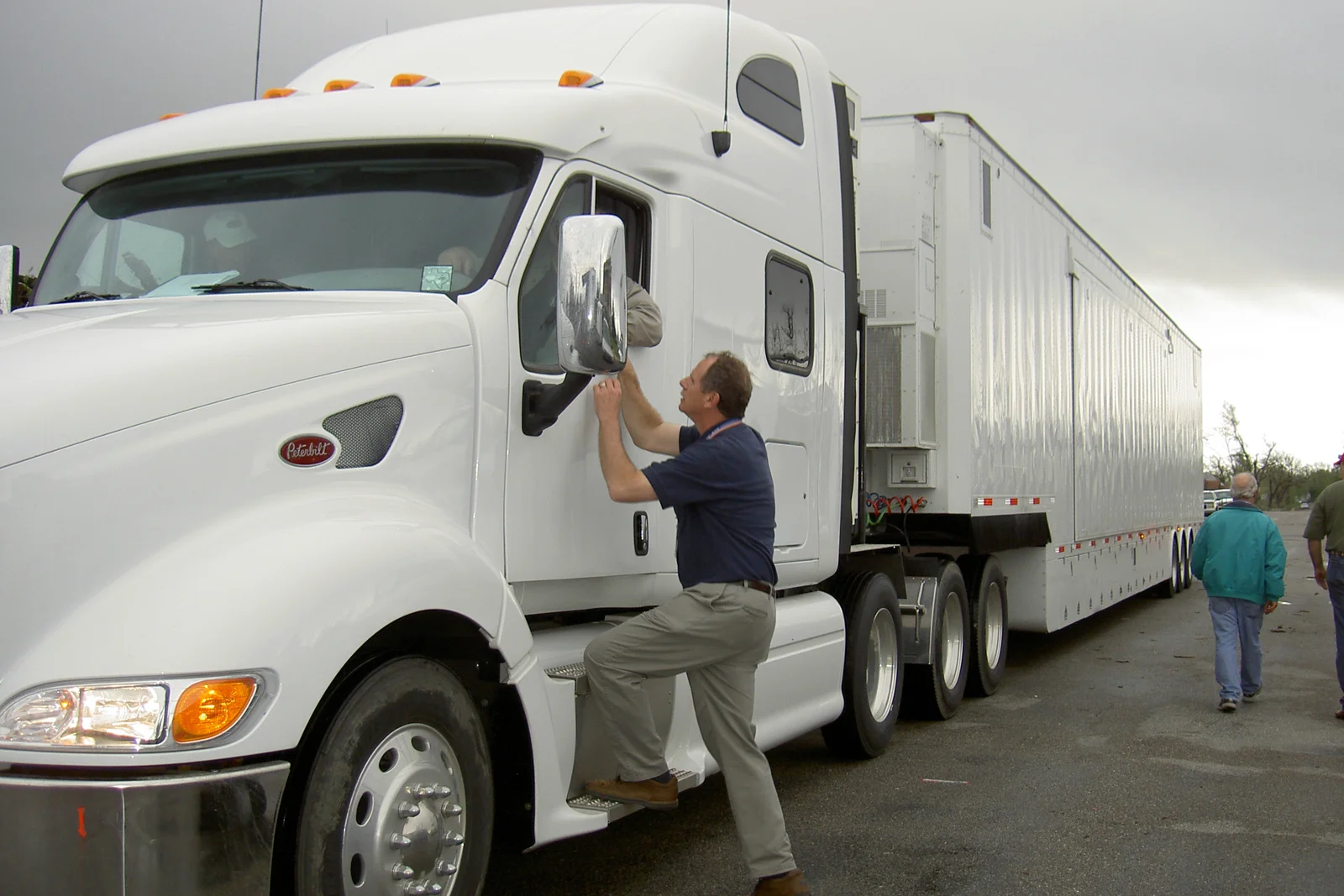
Short answer: You buy the whole company — the LLC or corporation that holds the USDOT number and MC authority — not the number by itself, because FMCSA says these numbers cannot be sold or leased outside a legitimate corporate transaction. Check the company's records on FMCSA systems, sign a written purchase agreement, report the ownership change to FMCSA, keep the insurance filing active, and keep your money in escrow until the company is actually handed over.
Here is the step-by-step version. Every rule below links to its source.
Step 1: Decide why you want to buy instead of starting from zero
You have two paths into running under your own authority:
- Start a new company. You apply for a USDOT number and operating authority yourself.
- Buy an existing company. You take over a business that already has its registrations and a track record.
A brand-new carrier enters FMCSA's New Entrant Safety Assurance Program. That is an 18-month monitoring period, and FMCSA usually does a safety audit within the first 12 months of operation (FMCSA New Entrant program; 49 CFR 385.307).
An existing company that is past that stage has something a new one does not: history you can check. Inspections, crashes, insurance filings and authority status are on public FMCSA records. That history can work for you or against you, which is why the checks in Step 4 matter so much.
Buying is not automatically better: you take on the company's past too. We compare both paths in new authority vs. buying a company.
Step 2: Understand what you are actually buying
The USDOT number belongs to a legal "person." FMCSA says a USDOT number belongs to the same legal person forever and may not be sold, transferred, rented or leased. But a company like "John Doe, Inc." is its own legal person. FMCSA's own example: John can sell the corporation, and the USDOT number goes with the company (FMCSA Fraud Alerts).
A sole proprietor's number cannot go to you. If the seller runs as "John Doe doing business as Doe Trucking," FMCSA says the buyer needs their own USDOT number, because nobody else can become John Doe (FMCSA FAQ: Can I sell my USDOT# or MC#?). So the company you buy should be an LLC or corporation.
MC authority is not a product on a shelf. On March 19, 2026, FMCSA warned carriers not to sell, purchase or lease USDOT or MC numbers outside a legitimate corporate transaction. The agency said doing so can lead to the USDOT number being inactivated and related registrations being revoked (FMCSA newsroom; Trucknews coverage).
So in a real deal you buy:
- The entity — the LLC or corporation itself (usually by buying its ownership interest).
- The registrations it holds — USDOT number, MC docket, process agent filing, and so on.
- Its history — safety record, insurance record, contracts, debts and any open claims.
- Any assets the agreement includes, such as trucks, trailers or customer contracts.
Old debts and claims usually stay with the company, so find them before you sign.
A note on Motus. FMCSA moved registration into a new system called Motus in May 2026 (FMCSA: Move into Motus). MC docket numbers were kept at launch (FreightWaves). Company changes are now made in Motus, and FMCSA says some changes need extra documents and agency review before they show up (FMCSA Registration Modernization FAQs).
Step 3: Find real companies and avoid the scams
Companies are advertised in Facebook groups, on forums, by "authority brokers" and on marketplaces like TruckBiz USA. The same red flags apply everywhere.
Red flag 1: A login offered instead of company ownership. A seller offering only account access has not transferred ownership of the company. Buying or renting registration itself is different from a compliant arrangement in which an owner-operator leases equipment onto a carrier (FMCSA bulletin). FMCSA says it will inactivate a USDOT number when it finds someone other than the assigned legal person using it (FMCSA Fraud Alerts).
Red flag 2: Upfront payment before you see anything. A seller who wants money wired before you have seen the company's records, the entity documents and the agreement is asking you to carry all the risk. Real deals use escrow (see Step 6).
Red flag 3: "Aged MC for sale" without company documents. Ask exactly what is being sold. If the offer is only a number, login or account package, walk away. A legitimate company purchase needs documents showing ownership of the whole LLC or corporation (FMCSA bulletin).
Red flag 4: The story does not match the records. Different owner names, recently changed phone numbers or email domains, or an insurance record that does not match what the seller says are all warning signs.
We go deeper on these in our guide to MC scams.
Step 4: Do your due diligence (the checklist)
The U.S. Small Business Administration advises buyers to do a thorough, objective investigation and to bring in an attorney and an accountant (SBA: Buy an existing business). For a trucking company, that investigation has some industry-specific parts. Use this list.
1. Registration and legal identity. Match the legal name and USDOT number in SAFER and check the current registration in Motus. Verify that the seller's business is an LLC or corporation through state records and formation documents. SAFER's "Entity Type" describes its operation, not its legal structure.
2. Authority and insurance history (L&I). FMCSA's Licensing & Insurance site shows historical insurance and authority records. Since the move to Motus in May 2026, FMCSA says L&I is for historical records only and Motus filings are not reflected there (FMCSA FAQ: What can I do in L&I?; L&I search). Look for gaps in coverage, many cancellations, or authority that was revoked and reinstated.
3. Insurance filing. Proof of liability insurance (Form BMC-91 or BMC-91X) is filed with FMCSA electronically by the insurance company. FMCSA says carriers should not send insurance certificates to FMCSA themselves (FMCSA FAQ: Insurance forms). So a certificate the seller emails you is not enough — confirm the filing on FMCSA records. Ask the seller's agent for the loss runs (claims history) too.
4. Crash and inspection record. FMCSA's Safety Measurement System groups inspection, crash and investigation data into seven categories called BASICs. Some are public (such as Unsafe Driving, Hours-of-Service and Vehicle Maintenance), but the Crash Indicator is not; only the carrier and enforcement can see it (FMCSA SMS). Ask the seller to show you their logged-in safety profile, including crashes.
5. Process agent (BOC-3). A carrier must have a process agent on file for every state where it operates, and the filing must stay valid to keep authority active (FMCSA: Form BOC-3).
6. UCR. Interstate motor carriers must register with the Unified Carrier Registration plan every year, before January 1 of the registration year (UCR Plan FAQ). Confirm the current and past years are paid.
7. Biennial update. Check the MCS-150 update schedule, which uses the last two digits of the USDOT number (49 CFR 390.19T). FMCSA has temporarily paused biennial-update enforcement and USDOT inactivation for updates due on or after June 1, 2026 (FMCSA notice). Check that the company information is accurate.
8. IFTA and IRP. Under IFTA, a carrier files one fuel tax return per quarter with its base state, even for a quarter with no miles (IFTA carrier information). Under IRP, the fleet is registered in its base state, which shares fees with the states where the trucks run (IRP registration). Ask for filed returns and account status.
9. Liens and debts. Factoring companies can file a UCC-1 financing statement on a client's receivables (Loren & Kean Law). Search UCC filings in the company's state, and ask about loans, equipment leases and unpaid bills.
10. Taxes. Ask for filed tax returns, and check what the company owes at the state and local level. SBA lists tax returns and financial statements among the documents a buyer should review.
11. Open claims and lawsuits. Ask in writing about cargo claims, accident claims and court cases. Get the answer into the purchase agreement.
12. Contracts. Read broker-carrier agreements, shipper contracts and equipment leases. Check whether they allow a change of ownership, and whether anyone must be notified.
More detail: our due diligence checklist and our guide to the MC and USDOT numbers.
Step 5: Make the legal transfer
Sign a written purchase agreement. It should name the entity, say exactly what is being bought (ownership interest, equipment, contracts), list the seller's promises about debts and claims, and say what happens if a promise turns out false. Have a business attorney review it.
Report the change to FMCSA. FMCSA says that after a corporate transaction, carriers often only need to report the ownership or officer change, with no transfer of authority (FMCSA FAQ). For a corporation or LLC that stays the same legal entity, the USDOT number stays the same, and an updated MCS-150 must be filed within 30 days of a change in company officials (FMCSA FAQ: Do I need a new USDOT number?).
FMCSA ended its former authority-transfer approval process in 2013. A transfer may be recorded as part of a purchase of an entire operation, with documentation from both parties. FMCSA says the operation must continue with the same safety management oversight and controls; a new entity may instead need new authority. This is not a purchase of an MC number by itself. Confirm the required filings with FMCSA and your attorney (ownership-change FAQ; March 19, 2026 bulletin).
Make the new owner the Company Official. FMCSA advises that the Company Official on the registration account should be the company owner or a person authorized to sign for the company (FMCSA Registration Modernization FAQs). Do not leave the seller in control of the account.
Re-bind the insurance. Tell the insurance carrier about the new owners before closing, not after. The insurer has to keep the electronic filing active, and the MCS-90 endorsement says coverage stays in force continuously until terminated (49 CFR 387.15). A gap can stop the company from running. See our insurance guide.
Change the bank and factoring setup. Move bank accounts to the new owners. If a factoring company is involved, get a written release or a new agreement, and make sure brokers are paying the right account.
Step 6: Pay safely: escrow until handover
Never send the full price straight to a seller you just met. Use escrow. On Escrow.com, the buyer pays into escrow, the seller delivers, the buyer confirms what was received, and only then are the funds released to the seller (Escrow.com: What is escrow?).
On TruckBiz USA, you buy the whole company (the LLC with its MC and USDOT), company records are checked against FMCSA, the buyer's money is held by Escrow.com until the handover is complete, and a manager walks both sides through each step. See how it works.
Step 7: Your first 30 days after the purchase
- At closing: Report the ownership change promptly and arrange the new official's authorized Motus access. FMCSA says new corporate owners should update its records immediately (FMCSA bulletin).
- Before your first load: Check driver qualifications, required drug and alcohol testing, vehicle inspections and maintenance records. Keep the company's existing safety records; do not wait until Week 3 to address missing requirements (FMCSA safety checklist).
- Days 1–7: Change passwords on email, load boards and factoring portals. Remove the seller's access to everything.
- Week 2: Update your broker setup packets with new owner information, new W-9 and bank details.
- Week 2–3: Check UCR, IFTA and IRP accounts are in good standing and match the new owners.
- Day 30: Pull SAFER and your SMS profile again and compare with what you saw at purchase.
FAQ
Can an MC number be sold on its own?
No. FMCSA warns against selling, purchasing or leasing USDOT or MC numbers outside a legitimate corporate transaction. You buy the company that holds the authority (FMCSA).
Do I need FMCSA approval to buy a trucking company?
FMCSA stopped pre-approving authority transfers in 2013. You still must report the ownership or officer change and keep insurance and BOC-3 filings in place (FMCSA FAQ).
Does the USDOT number stay the same after I buy the company?
Yes, if the LLC or corporation stays the same legal entity. File an updated MCS-150 within 30 days of the change in officials (FMCSA FAQ).
Can I buy a sole proprietor's trucking business with its USDOT number?
No. FMCSA says the buyer of a sole proprietorship needs its own USDOT number (FMCSA FAQ).
How do I avoid getting scammed?
Check the company on SAFER and Motus, with L&I used only for older history, never accept "login sharing," never pay upfront, and hold money in escrow until the company is yours. Questions? Call TruckBiz USA at (888) 616-8249 or browse companies. Selling? Start at /sell.
This article is general information, not legal or tax advice. Rules change; confirm current requirements with FMCSA and your attorney before you close.
Sources
- FMCSA — New Entrant Safety Assurance Program: https://www.fmcsa.dot.gov/safety/new-entrant-safety-assurance-program
- 49 CFR 385.307 (Cornell LII): https://www.law.cornell.edu/cfr/text/49/385.307
- FMCSA — Fraud Alerts: https://www.fmcsa.dot.gov/registration/fraud-alerts
- FMCSA FAQ — Can I sell my USDOT# or MC#?: https://www.fmcsa.dot.gov/faq/can-i-sell-my-usdot-or-mc-ie-operating-authority
- FMCSA — DO NOT Sell, Purchase, or Lease a USDOT or MC Number: https://www.fmcsa.dot.gov/newsroom/do-not-sell-purchase-or-lease-usdot-or-mc-number
- Trucknews — Stop selling USDOT and MC numbers, FMCSA warns: https://www.trucknews.com/regulations/stop-selling-usdot-and-mc-numbers-fmcsa-warns/1003211122
- FMCSA — Move into Motus: https://www.fmcsa.dot.gov/registration/move-motus
- FMCSA — Registration Modernization FAQs: https://www.fmcsa.dot.gov/registration/modernization-faqs
- FreightWaves — FMCSA Delivers on 30-Year Promise With Motus: https://www.freightwaves.com/news/fmcsa-delivers-on-30-year-promise-with-motus-registration-system
- SBA — Buy an existing business or franchise: https://www.sba.gov/business-guide/plan-your-business/buy-existing-business-or-franchise
- FMCSA — SAFER: https://safer.fmcsa.dot.gov/
- FMCSA — SAFER field definitions: https://safer.fmcsa.dot.gov/saferhelp.aspx
- FMCSA FAQ — What can I do in Licensing and Insurance (L&I)?: https://www.fmcsa.dot.gov/faq/what-can-i-do-licensing-and-insurance-li
- FMCSA — Licensing & Insurance public site: https://li-public.fmcsa.dot.gov/
- FMCSA FAQ — What forms are required for insurance and where can I find them?: https://www.fmcsa.dot.gov/faq/what-forms-are-required-insurance-and-where-can-i-find-them
- FMCSA — Safety Measurement System: https://csa.fmcsa.dot.gov/about/Measure
- FMCSA — Form BOC-3: https://www.fmcsa.dot.gov/registration/form-boc-3-designation-agents-service-process
- UCR Plan — FAQ: https://plan.ucr.gov/frequently-asked-questions/
- 49 CFR 390.19T — Identification reports and filing schedule: https://www.law.cornell.edu/cfr/text/49/390.19T
- FMCSA — Temporary Suspension of the Biennial Update Requirement: https://www.fmcsa.dot.gov/registration/temporary-suspension-usdot-inactivation-motus
- IFTA — Carrier Information: https://www.iftach.org/Carriers/
- IRP — Registration: https://www.irponline.org/page/Registration
- Loren & Kean Law — Factors and UCC-1 financing statements: https://lorenkeanlaw.com/why-factors-should-continue-due-diligence-on-their-client-after-filing-their-financing-statement/
- FMCSA FAQ — Do I need a new USDOT number if I am changing my company's legal name or form of business?: https://www.fmcsa.dot.gov/faq/do-i-need-new-usdot-number-if-i-am-changing-my-companys-legal-name-or-form-business
- FMCSA FAQ — How do I notify FMCSA of my Operating Authority (OA) ownership change?: https://www.fmcsa.dot.gov/faq/how-do-i-notify-fmcsa-my-operating-authority-oa-ownership-change
- 49 CFR 387.15 (Cornell LII): https://www.law.cornell.edu/cfr/text/49/387.15
- Escrow.com — What is escrow?: https://www.escrow.com/what-is-escrow